
ACTOM invests in SA’s industrial future, as Pretoria West becomes integrated transformer and battery manufacturing hub
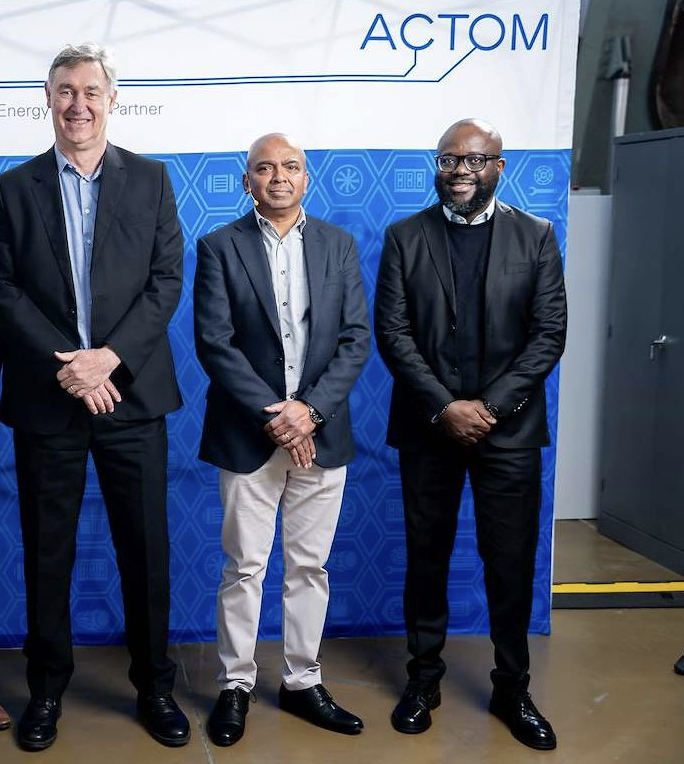
ACTOM is pleased to announce a major milestone in the revitalisation of its Pretoria West facility, confirming the site’s transformation into a fully integrated manufacturing hub for large‑class power transformers, high‑voltage equipment and lithium‑ion battery energy storage systems.
The development marks a significant step in strengthening South Africa’s grid infrastructure, expanding local industrial capacity and positioning ACTOM as one of the few African OEMs able to support multiple components of the energy value chain.
ACTOM Group CEO Mervyn Naidoo says the recovery of the Pretoria West plant represents a deliberate investment in South Africa’s industrial future.
“This facility was dormant for almost a year, with staff on layoff and critical infrastructure requiring restoration. Today, it is once again a productive, safe and compliant manufacturing environment that delivers genuine industrial value,” he says.
“We have revived jobs, reinstated full transformer manufacturing capability and created a platform for long‑term growth.”
Expanding transformer capacity
Following ACTOM’s acquisition of SGB‑SMIT Power Matla, the Pretoria West plant now provides four times the transformer manufacturing capacity previously available at ACTOM’s Wadeville operation, in Johannesburg.
The site is being ramped up through a phased programme that will ultimately enable production of Class 3 transformers up to 500 MVA and 400 kV. The restored facility includes upgraded core manufacturing, coil winding, active‑part assembly, tank fabrication and full testing capabilities.
Alongside transformer production, ACTOM High Voltage Equipment (HVE) has expanded its manufacturing footprint at the site. Casbah Zwane, Divisional CEO for ACTOM High Voltage Equipment, says the move has effectively doubled its capacity compared to the previous Johannesburg facility.
“The Pretoria West plant gives us the space, layout and quality environment required to meet rising demand for circuit breakers, instrument transformers and high‑voltage disconnector switches. This expansion directly supports South Africa’s Transmission Development Plan, Independent Transmission Programme, distribution network upgrades, renewable‑energy grid‑tie projects and even rail‑infrastructure modernisation,” Zwane explains.
End-to-end energy‑storage manufacturing ecosystem
ACTOM Static Energy has also integrated its lithium‑ion battery assembly and inverter manufacturing operations into the Pretoria West campus. Managing Director Louis Heyns says the combined facility creates a true end‑to‑end local energy‑storage manufacturing ecosystem.
“We now manufacture batteries, inverters, transformers and medium‑voltage integration systems on one industrial campus. This allows us to test complete integrated systems in‑factory – something unmatched in South Africa – and deliver bankable, grid‑scale solutions with full accountability,” Heyns says.
He adds that the integration has already accelerated growth. “Our orders in the first quarter of the financial year have already surpassed last year’s total turnover. The campus gives us room to expand further, including local manufacture of sheet‑metal components and containerised solutions.”
Driving the broader African strategy
Naidoo emphasises that the Pretoria West hub is central to ACTOM’s broader African strategy.
“Our vision is to manufacture for Africa, by Africa, in Africa. This site strengthens our ability to supply regional industrial hubs in Zambia, Kenya and future West African markets,” he explains.
“As Africa becomes the world’s largest economically active population by 2050, regional supply chains and local manufacturing will be essential for long‑term energy security and economic resilience.”
Zwane agrees: “This expansion enables us to serve not only Southern Africa but new markets across East and West Africa. We have already secured orders in Kenya, demonstrating the continental demand for locally manufactured, high‑quality grid equipment.”
Naidoo concludes: “South Africa’s structural reforms, from the IPP programme to transmission expansion and rail modernisation, have unlocked a once‑in‑a‑generation infrastructure investment cycle. ACTOM is committed to ensuring that this investment translates into industrialisation, job creation and sustainable economic growth.”

New lubricants for farmers

Surveying instruments that make building of roads and bridges more accurate

BMG’s Fenner Red Powertwist Plus Drive V-belts for the food and beverage sector
About The Author
